
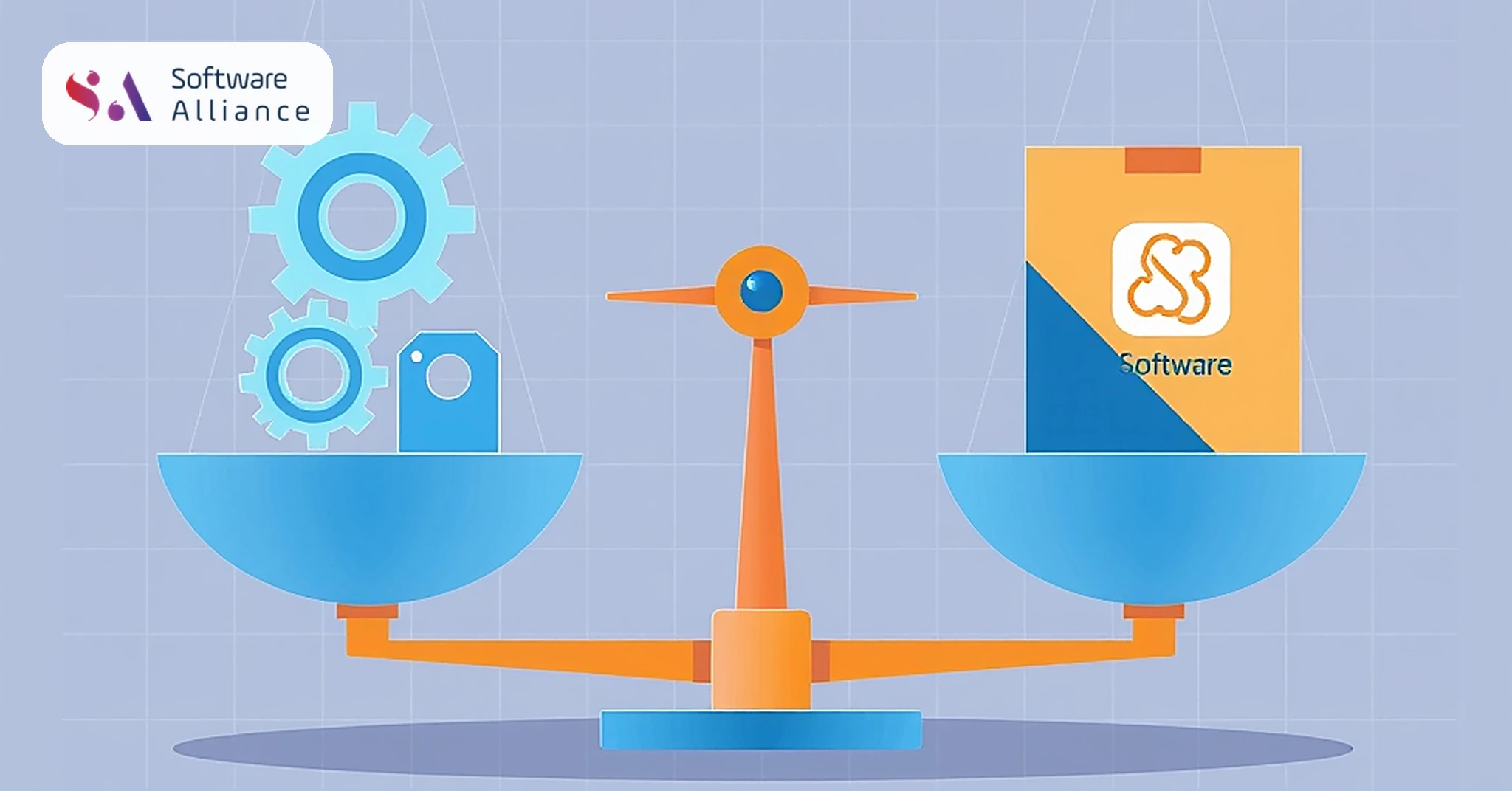
Build vs Buy: Custom Software Dilemma
- By: Software Alliance
- Date: August 16, 2026
- Custom software offers tailored solutions but requires significant investment
- Off-the-shelf software provides quick deployment but may lack customization
- The build vs buy decision depends on business needs and IT infrastructure
Weigh the pros and cons of custom software vs off-the-shelf solutions. Make an informed decision with our expert guide.
Introduction to Custom Software vs Off-the-Shelf
When it comes to software solutions, businesses are often faced with a dilemma: build or buy? The decision to invest in custom software or opt for an off-the-shelf solution can have significant implications for a company's operations, efficiency, and bottom line. In this article, we will delve into the pros and cons of each option, exploring the benefits and drawbacks of custom software development versus off-the-shelf software solutions.
The build vs buy decision is not a new phenomenon, but it has become increasingly relevant in today's fast-paced digital landscape. With the rise of software as a service (SaaS) solutions, businesses are now faced with a plethora of options, each with its own set of advantages and disadvantages. To make an informed decision, it is essential to understand the key differences between custom software and off-the-shelf solutions.
Custom vs SaaS: Understanding the Landscape
The custom vs SaaS debate is a crucial aspect of the build vs buy decision. Custom software development involves creating a tailored solution that meets specific business needs, while SaaS solutions provide a range of features and functionalities that can be accessed online. SaaS solutions have become increasingly popular in recent years, with companies like Salesforce, Microsoft, and Google offering a range of cloud-based solutions.
However, SaaS solutions may not always meet the unique needs of a business. In such cases, custom software development may be the better option. For example, a company that requires a customized CRM system that integrates with its existing infrastructure may find that custom software development is the way to go.
Benefits of Custom Software
Custom software development offers a range of benefits, including tailored solutions that meet specific business needs. With custom software, companies can create a solution that is designed to address their unique challenges and requirements. This can lead to increased efficiency, productivity, and competitiveness. Additionally, custom software can be integrated with existing systems and infrastructure, providing a seamless user experience.
Some of the key benefits of custom software include: * Tailored solutions that meet specific business needs * Increased efficiency and productivity * Improved competitiveness * Integration with existing systems and infrastructure * Enhanced security and control
Real-World Examples of Custom Software
For example, a company like Walmart may require a customized inventory management system that integrates with its existing supply chain infrastructure. In this case, custom software development would be the better option, as it would allow Walmart to create a tailored solution that meets its specific needs.
Another example is a company like Netflix, which requires a customized content recommendation engine that integrates with its existing user data. In this case, custom software development would be the way to go, as it would allow Netflix to create a tailored solution that meets its specific needs.
Drawbacks of Custom Software
While custom software development offers numerous benefits, it also has some significant drawbacks. One of the primary concerns is the cost. Developing custom software can be a costly endeavor, requiring significant investment in time, money, and resources. For example, a company like IBM may spend millions of dollars on custom software development, with costs ranging from $500,000 to $5 million or more, depending on the complexity of the project.
Additionally, custom software development can be a time-consuming process, requiring extensive planning, design, and testing. This can lead to delays and cost overruns, which can be detrimental to a company's bottom line.
Some of the key drawbacks of custom software include: * High development costs * Time-consuming development process * Requires significant investment in time, money, and resources * May require ongoing maintenance and updates * Can be difficult to scale
Mitigating the Risks of Custom Software Development
To mitigate the risks of custom software development, companies can take several steps. For example, they can: 1. Conduct thorough requirements gathering and planning to ensure that the project is well-defined and scoped. 2. Use agile development methodologies to iterate and refine the software development process. 3. Invest in automated testing and quality assurance to ensure that the software meets the required standards. 4. Establish clear communication channels with the development team to ensure that issues are addressed promptly.
By taking these steps, companies can reduce the risks associated with custom software development and ensure that the project is delivered on time, within budget, and to the required quality standards.
Benefits of Off-the-Shelf Software
Off-the-shelf software solutions, on the other hand, offer a range of benefits, including quick deployment and lower upfront costs. With off-the-shelf software, companies can rapidly deploy a solution that meets their basic needs, without requiring significant investment in custom development. For example, a company like Salesforce offers a range of cloud-based solutions that can be deployed quickly and easily, with costs starting at around $25 per user per month.
Additionally, off-the-shelf software solutions often provide a range of features and functionalities, making them a versatile option for businesses. For example, a company like Microsoft offers a range of productivity software, including Word, Excel, and PowerPoint, which can be used to meet a range of business needs.
Some of the key benefits of off-the-shelf software include: * Quick deployment and lower upfront costs * Range of features and functionalities * Scalability and flexibility * Ongoing maintenance and updates provided by the vendor * Lower total cost of ownership
Examples of Off-the-Shelf Software
For example, a company like HubSpot offers a range of marketing, sales, and customer service software that can be used to meet a range of business needs. The software is cloud-based, scalable, and flexible, making it a versatile option for businesses.
Another example is a company like Zendesk, which offers a range of customer service software that can be used to meet a range of business needs. The software is cloud-based, scalable, and flexible, making it a versatile option for businesses.
Drawbacks of Off-the-Shelf Software
While off-the-shelf software solutions offer numerous benefits, they also have some significant drawbacks. One of the primary concerns is the lack of customization. Off-the-shelf software solutions are designed to meet the needs of a broad range of businesses, which can result in a lack of tailored functionality. For example, a company like SAP offers a range of enterprise resource planning (ERP) software that can be used to meet a range of business needs. However, the software may not provide the level of customization that a company requires, which can lead to workarounds and inefficiencies.
Additionally, off-the-shelf software solutions may require significant configuration and customization to meet specific business needs. This can lead to increased costs and complexity, which can be detrimental to a company's bottom line.
Some of the key drawbacks of off-the-shelf software include: * Lack of customization and tailored functionality * May require significant configuration and customization * Can be inflexible and rigid * May not integrate with existing systems and infrastructure * Can be vulnerable to security risks
Mitigating the Risks of Off-the-Shelf Software
To mitigate the risks of off-the-shelf software, companies can take several steps. For example, they can: 1. Conduct thorough research and evaluation to ensure that the software meets the required needs and standards. 2. Invest in customization and configuration to ensure that the software meets the specific business needs. 3. Establish clear communication channels with the vendor to ensure that issues are addressed promptly. 4. Invest in ongoing training and support to ensure that the software is used effectively and efficiently.
By taking these steps, companies can reduce the risks associated with off-the-shelf software and ensure that the software meets the required needs and standards.
Making the Build vs Buy Decision
So, how do you decide between building custom software and buying off-the-shelf software? The answer depends on your business needs, IT infrastructure, and budget. If you require a tailored solution that meets specific business needs, custom software development may be the best option. However, if you need a quick and cost-effective solution that provides a range of features and functionalities, off-the-shelf software may be the way to go.
To make an informed decision, consider the following factors: * Business needs and requirements * IT infrastructure and existing systems * Budget and cost constraints * Scalability and flexibility requirements * Security and control requirements
Step-by-Step Guide to Making the Build vs Buy Decision
Here is a step-by-step guide to making the build vs buy decision: 1. Define your business needs and requirements. 2. Evaluate your IT infrastructure and existing systems. 3. Determine your budget and cost constraints. 4. Assess your scalability and flexibility requirements. 5. Evaluate your security and control requirements. 6. Research and evaluate off-the-shelf software solutions. 7. Research and evaluate custom software development options. 8. Compare the costs and benefits of each option. 9. Make an informed decision based on your business needs and requirements.
Build vs Buy: A Cost-Benefit Analysis
To illustrate the build vs buy decision, let's consider a cost-benefit analysis. Suppose a company requires a customized CRM system that integrates with its existing infrastructure. The cost of custom software development is estimated to be around $500,000, with a development time of 6 months. On the other hand, an off-the-shelf CRM solution is available for $25 per user per month, with a deployment time of 1 month.
In this scenario, the company needs to weigh the costs and benefits of each option. While the off-the-shelf solution is quicker and cheaper, it may not provide the level of customization and integration that the company requires. On the other hand, the custom software development option provides a tailored solution, but it is more expensive and time-consuming.
Trade-Offs and Considerations
When making the build vs buy decision, there are several trade-offs and considerations to keep in mind. For example: * Cost vs customization: Custom software development provides a tailored solution, but it is more expensive. Off-the-shelf software solutions are cheaper, but they may not provide the level of customization that a company requires. * Time vs scalability: Custom software development takes longer, but it provides a scalable solution. Off-the-shelf software solutions are quicker, but they may not be scalable. * Security vs flexibility: Custom software development provides a secure solution, but it may not be flexible. Off-the-shelf software solutions are more flexible, but they may not be secure.
By considering these trade-offs and considerations, companies can make an informed decision that meets their business needs and requirements.
Conclusion
In conclusion, the build vs buy decision is a complex one, requiring careful consideration of the pros and cons of each option. By understanding the benefits and drawbacks of custom software development and off-the-shelf software solutions, businesses can make an informed decision that meets their unique needs and requirements. Whether you choose to build or buy, the key is to find a solution that aligns with your business goals and objectives. Software Alliance can help you navigate the build vs buy decision, providing expert guidance and support to ensure you find the right solution for your business.
Frequently Asked Questions
What is the main difference between custom software and off-the-shelf software?
Custom software is tailored to meet specific business needs, while off-the-shelf software is a pre-built solution that may not offer the same level of customization.
How do I decide between building custom software and buying off-the-shelf software?
Consider your business needs, IT infrastructure, and budget to make an informed decision. Evaluate the pros and cons of each option and choose the one that best aligns with your goals.
Arutame täiuslikkusttehnoloogialahendus!
Võtke meiega ühendust, et alustada oma projekti usalduse ja täpsusega - teie edu on vaid ühe sammu kaugusel!