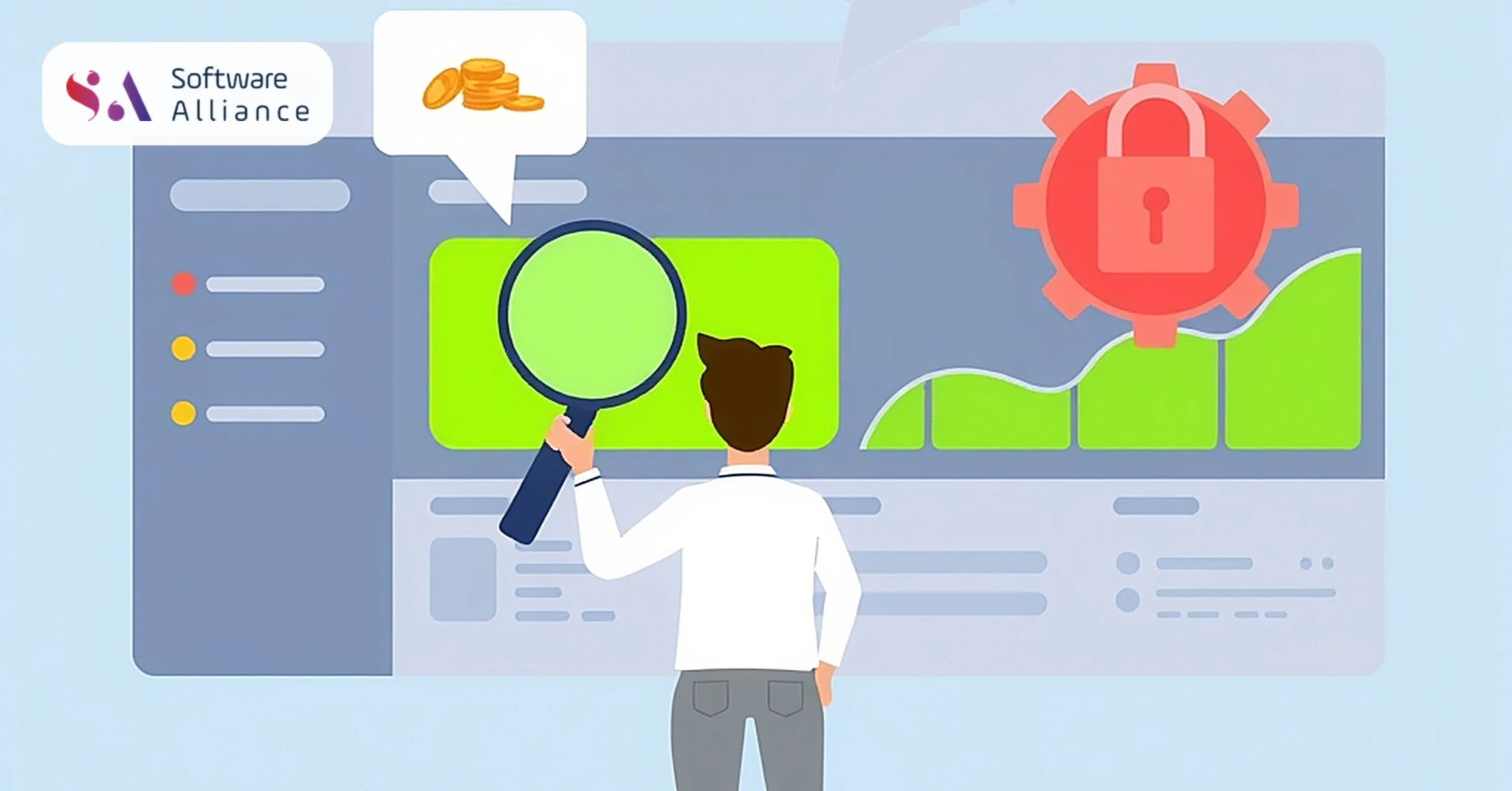
CRM Cost Optimization
- By: Software Alliance
- Date: July 30, 2026
- Implement a thorough needs assessment to avoid unnecessary features.
- Negotiate with vendors to secure the best pricing and terms.
- Monitor and adjust usage to ensure optimal ROI.
Minimize CRM expenses with expert strategies. Learn how to optimize your CRM software costs.
Introduction to CRM Cost Optimization
The cost of CRM software can be a significant expense for businesses, with prices ranging from a few dollars to hundreds of dollars per user per month. However, with the right strategies, it is possible to minimize CRM expenses and optimize your CRM software costs. In this article, we will explore expert strategies for CRM cost optimization, including needs assessment, vendor negotiation, and usage monitoring. We will also delve into the factors that affect CRM software costs and provide concrete examples of how businesses can save money on their CRM investments.
Understanding CRM Software Costs
CRM software costs can vary widely depending on a number of factors, including the number of users, features and functionality, deployment model, and level of customization. For example, a basic CRM system with limited features may cost around $10-20 per user per month, while a more advanced system with advanced features and customization may cost $50-100 per user per month. It is essential to understand these factors and how they impact your CRM software costs.
Factors Affecting CRM Software Costs
The following are some of the most common factors affecting CRM software costs: * Number of users: The more users you have, the higher your CRM software costs will be. For instance, a business with 100 users may pay $1,000 to $2,000 per month for a basic CRM system, while a business with 1,000 users may pay $10,000 to $20,000 per month. * Features and functionality: The more features and functionality you need, the higher your CRM software costs will be. For example, a CRM system with advanced features like marketing automation and customer service may cost $50-100 per user per month, while a basic CRM system with only contact management and sales automation may cost $10-20 per user per month. * Deployment model: Cloud-based CRM systems are generally less expensive than on-premise systems. Cloud-based CRM systems can cost 30-50% less than on-premise systems, mainly due to the elimination of hardware and maintenance costs. * Level of customization: The more customization you need, the higher your CRM software costs will be. Customization can add 10-30% to the overall cost of the CRM system, depending on the complexity of the customization.
Comparison of CRM Pricing Models
Different CRM vendors offer different pricing models, which can affect the overall cost of the CRM system. For example: * Salesforce offers a tiered pricing model, with prices starting at $25 per user per month for the Essentials edition and going up to $300 per user per month for the Unlimited edition. * HubSpot offers a pricing model based on the number of contacts, with prices starting at $50 per month for up to 1,000 contacts and going up to $2,000 per month for up to 100,000 contacts. * Zoho CRM offers a pricing model based on the number of users, with prices starting at $12 per user per month for the Standard edition and going up to $35 per user per month for the Ultimate edition.
Needs Assessment for CRM Cost Optimization
A thorough needs assessment is essential for CRM cost optimization. This involves identifying your business requirements and determining which features and functionality you need. By understanding your needs, you can avoid unnecessary features and costs. For example, if you only need basic contact management and sales automation, you may not need to pay for advanced features like marketing automation and customer service.
Conducting a Needs Assessment
To conduct a needs assessment, follow these steps: 1. Identify your business goals and objectives. What do you want to achieve with your CRM system? 2. Determine which features and functionality you need to achieve your goals. Do you need advanced features like marketing automation and customer service, or will basic features like contact management and sales automation suffice? 3. Evaluate different CRM systems and vendors. Research the features and pricing of different CRM systems and vendors to determine which one best meets your needs. 4. Compare prices and features. Create a comparison chart to evaluate the features and pricing of different CRM systems and vendors.
Example of a Needs Assessment
Let's say a business wants to implement a CRM system to manage its sales and customer service processes. The business has 50 users and needs basic features like contact management, sales automation, and customer service. After conducting a needs assessment, the business determines that it needs a CRM system with the following features: * Contact management * Sales automation * Customer service * Reporting and analytics The business evaluates different CRM systems and vendors and determines that the best option is a cloud-based CRM system with a tiered pricing model. The business chooses the Standard edition, which costs $25 per user per month and includes all the necessary features.
Vendor Negotiation for CRM Cost Optimization
Vendor negotiation is another essential strategy for CRM cost optimization. By negotiating with vendors, you can secure the best pricing and terms for your CRM software. This may involve negotiating discounts, free trials, or customized pricing plans. For example, you may be able to negotiate a discount for a large number of users or a long-term contract.
Tips for Vendor Negotiation
To negotiate with vendors effectively, follow these tips: 1. Do your research: Understand the market and the vendor's pricing and terms. Research the vendor's competitors and their pricing models to determine if you can get a better deal. 2. Be clear about your needs: Communicate your business requirements and expectations. Make sure the vendor understands what you need and what you are willing to pay. 3. Be flexible: Be open to different pricing models and terms. Consider a tiered pricing model or a customized pricing plan that meets your specific needs. 4. Be willing to walk away: If the vendor is not willing to meet your needs, be willing to walk away. Don't be afraid to walk away from a deal if it's not in your best interest.
Example of Vendor Negotiation
Let's say a business wants to implement a CRM system and has chosen a vendor that offers a tiered pricing model. The business has 100 users and needs the Advanced edition, which costs $50 per user per month. The business negotiates with the vendor and is able to secure a discount of 10% for a long-term contract. The business also negotiates a free trial period of 30 days to test the CRM system before committing to a contract.
Usage Monitoring for CRM Cost Optimization
Usage monitoring is essential for CRM cost optimization. By monitoring your usage, you can ensure that you are getting the most out of your CRM software and avoid unnecessary costs. For example, you may be able to identify unused features or users and adjust your subscription accordingly.
Tips for Usage Monitoring
To monitor your usage effectively, follow these tips: 1. Track user adoption: Monitor which features and functionality are being used. Use analytics and reporting tools to track user adoption and identify areas for improvement. 2. Monitor data storage: Track your data storage needs and adjust your subscription accordingly. Make sure you have enough storage space for your data and adjust your subscription if necessary. 3. Review reports and analytics: Use reports and analytics to understand your usage and identify areas for improvement. Review reports on user adoption, data storage, and other key metrics to optimize your CRM usage.
Tools for Usage Monitoring
There are several tools available for usage monitoring, including: * CRM analytics and reporting tools * User adoption tracking tools * Data storage monitoring tools * Integration with other business systems, such as ERP and marketing automation systems
Best Practices for CRM Cost Optimization
In addition to the strategies mentioned above, there are several best practices for CRM cost optimization. These include: * Regularly reviewing and adjusting your CRM subscription * Monitoring user adoption and adjusting your subscription accordingly * Using analytics and reporting tools to optimize your CRM usage * Considering a cloud-based CRM system to reduce costs * Negotiating with vendors to secure the best pricing and terms
Common Mistakes to Avoid in CRM Cost Optimization
There are several common mistakes to avoid in CRM cost optimization, including: * Not conducting a thorough needs assessment * Not monitoring usage and adjusting the subscription accordingly * Not negotiating with vendors to secure the best pricing and terms * Not considering a cloud-based CRM system to reduce costs * Not regularly reviewing and adjusting the CRM subscription
Conclusion
In conclusion, CRM cost optimization is essential for businesses to minimize expenses and optimize their CRM software costs. By implementing a thorough needs assessment, negotiating with vendors, and monitoring usage, you can ensure that you are getting the most out of your CRM software and avoiding unnecessary costs. If you need help with CRM cost optimization, Software Alliance can provide expert guidance and support to help you optimize your CRM investment and achieve your business goals. Contact us today to learn more about how we can help you optimize your CRM costs and improve your business performance.
Frequently Asked Questions
What are the most common factors affecting CRM software costs?
The most common factors affecting CRM software costs include the number of users, features and functionality, deployment model, and level of customization.
Let’s discuss the perfect technology solution!
Contact us now to start your project with confidence and precision — your success is just one step away!